
1914 - 2018
By: Fanta Kaba | Date Added:
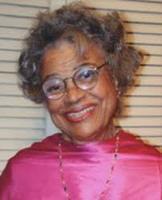
Throughout her career, Gertrude Hadley Jeannette was a playwright, producer, director, and actress with roles on Broadway. Involved in the civil rights movement, she also became a rare woman taxicab driver in New York. Retired after a seven-decade theater career, she remained active in the New York theater scene. Jeannette was a member of the Arkansas Black Hall of Fame. Gertrude Hadley was born in Urbana (Union County) on November 28, 1914, to Willis Lawrence Hadley and Salley Gertrude Crawford Hadley. She attended Dunbar High School in Little Rock (Pulaski County) and had plans to attend Fisk University. Instead, she eloped in 1934 to New York City with Joe Jeannette II, a prizefighter and president of the Harlem Dusters, a motorcycle club. The couple became involved in the civil rights movement. When American singer, actor, and activist Paul Robeson came to New York City to deliver a speech, Joe Jeannette served as one of his bodyguards. In an interview, Gertrude Jeannette remembered Robeson’s visit as the first time she saw the Ku Klux Klan: “They came out to lynch Paul Robeson. And I said, ‘Oh my god.’ I said, ‘I lived in the South all my life and I never heard of this…Ku Klux Klan.’ This is the first time I saw the robes and everything. So my husband said, ‘Get to the motorcycle! Get to the motorcycle!’ And then we rushed Robeson out of there. And all the motorcycles cranked up and…got him out of there.” In 1935, Jeannette learned to drive and became the first woman to get a license to drive a motorcycle in New York City. In 1942, she responded to a taxicab shortage by becoming a cab driver. (Later sources list her as the first woman to drive a cab in New York City, but that honor belongs to Wilma K. Russey.) Her male coworkers did not respond to her employment favorably. In one instance, she said a driver in a green checker cab cut in front of her on the road. “I rammed my fender under his fender, swung it over to the right and ripped it!” she said. When the driver became angry, she yelled from her car, “You tried to cut in front of me! I couldn’t stop.” Surprised by her feminine voice, the angry cabbie yelled, “A woman driver! A woman driver!” During this time, Jeannette also took bookkeeping classes at Abyssinian Baptist Church and speech classes at the American Negro Theatre. In 1945, Jeannette began pursuing an acting career, first through her lead role in the play Our Town. Five years later, she performed in This Way Forward, which was the first play Jeannette wrote. The autobiographical play shows the life of sharecropping families in the South. Jeannette replaced Pearl Bailey in God’s Trombones, in which she appeared alongside Fred O’Neil. Jeannette continued to work in the theater as well as in film and television. Jeannette’s experience driving a cab inspired her creatively, especially in playwriting. She went on to hold roles in Broadway plays such as Lost in the Stars, Amen Corner, and The Great White Hope. Some of Jeannette’s film credits included Shaft, Black Girl, and Cotton Comes to Harlem. Jeannette directed, produced, and wrote her own plays, as well as the works of other playwrights. In 1979, Jeannette founded the HADLEY Players (Harlem Artists Development League Especially for You) in Harlem. The mission of the HADLEY Players was to give artists a chance to develop their talents and skills in the theater, and to enrich Harlem’s cultural life.
click hereShare This Story


Share your thoughts on this story with us. Your comments will not be made public.
Email
Copyright ©2016 - Design By Bureau Blank