
1896 - 1984
By: St | Date Added:
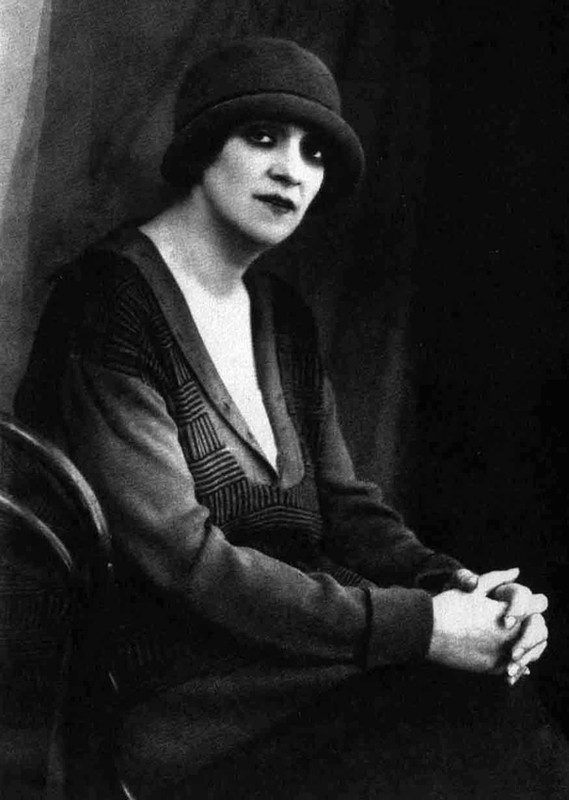
Faina Ranevskaya, is recognized as one of the greatest Soviet actresses in both tragedy and comedy. She was also famous for her aphorisms. She acted in plays by Anton Chekhov, Aleksandr Ostrovsky, Maxim Gorky, Ivan Krylov, Fyodor Dostoevsky, Leo Tolstoy, and others. She was born as Faina Feldman to a wealthy family in the city of Taganrog. Her father, owned a dry-ink factory, several buildings, a shop, and the steamboat "Saint Nicolas". Faina's mother was a great admirer of literature and art. That and her passion for Chekhov influenced her love of art, poetry, music, and theater. Faina Feldman attended the elementary school classes at the Mariinskaya Gymnasium for Girls, and then received regular home education. She was given music, singing, foreign language lessons. She loved reading. Her passion for theater began when she was 14. Her attendance of Chekhov's The Cherry Orchard at the Moscow Art Theater was an experience that had great impact on her. Her pseudonym "Ranevskaya," which later became her official surname, also came from that theater visit. In 1915 she left Taganrog for Moscow to pursue a career in the theater. Faina became estranged from her family over her choice of career, which they apparently rejected. She started as an extra actor in crowd or background scenes at the Summer Theater in Malakhovka near Moscow in 1915. The Feldman family emigrated in 1917, but she decided to stay and continued her acting career, working in the theaters of Kerch, Rostov on Don, at the mobile theater "The First Soviet Theater" in Crimea, also in Baku, Arkhangelsk, Smolensk and other. In 1931 she acted at the Chamber Theater. The film known as Boule de Suif in the U.S., directed by Mikhail Romm, marked her debut as a film actress in 1934. It was a silent black and white film based on the novel Boule de Suif by Guy de Maupassant, in which she starred as Madame Loiseau. Although the film was silent, she learned several sayings of Madame Loiseau in French from the original novel by Maupassant. Romain Rolland, a French writer who visited the Soviet Union in the 1930s, loved the film, and his favorite actor in the movie was Faina Ranevskaya. At his request, Boule de Suif shown in French cinemas, where it became a box-office success. She played on stage of the Central Academic Theatre of the Russian Army (1935-1939), Drama Theater, now Mayakovsky Theater. Moscow Pushkin Drama Theatre (1955-1963), and finally Mossovet Theater. Legendary Faina Ranevskaya went down in history as the most eccentric actress of Russian cinema of the Soviet epoch. A creator of whole gallery of inimitable farcical characters, a philosopher with a cigarette, a scandalous persona, a caustic lady, and a sensitive person – all this was Faina Ranevskaya. Much has been written about her, whereas her witty aphorisms and gags remain popular till date. The actress was awarded the Stalin Prize for outstanding creative achievements on stage in 1949, and in 1951 for her work in the film Have Their Motherland. In 1961 She was awarded the title of People's Artist of the USSR. The actress died in 1984 in Moscow and was buried at the Donskoe Cemetery. A memorial plate dedicated to Ranevskaya was placed on her birthhouse in the city of Taganrog on August 29, 1986. In 1992 British "Who's Who" encyclopedia named Ranevskaya among the world's Top Ten Actors of the 20th century. That was done despite the fact that the actress had never played a major part in a movie: all her roles were supporting ones. In a newspaper article. On May 16, 2008, a Ranevskaya Monument was inaugurated in Taganrog in front of actress's birth house on Ulitsa Frunze 10 within the framework of the International Ranevskaya Theater Festival "The Great Province". In 2017 it was announced that Faina Ranevskaya's birth house in Taganrog will re-open its doors as a museum.
click hereShare This Story


Share your thoughts on this story with us. Your comments will not be made public.
Email
Copyright ©2016 - Design By Bureau Blank