
1892 - 1973
By: Women's Enews | Date Added:
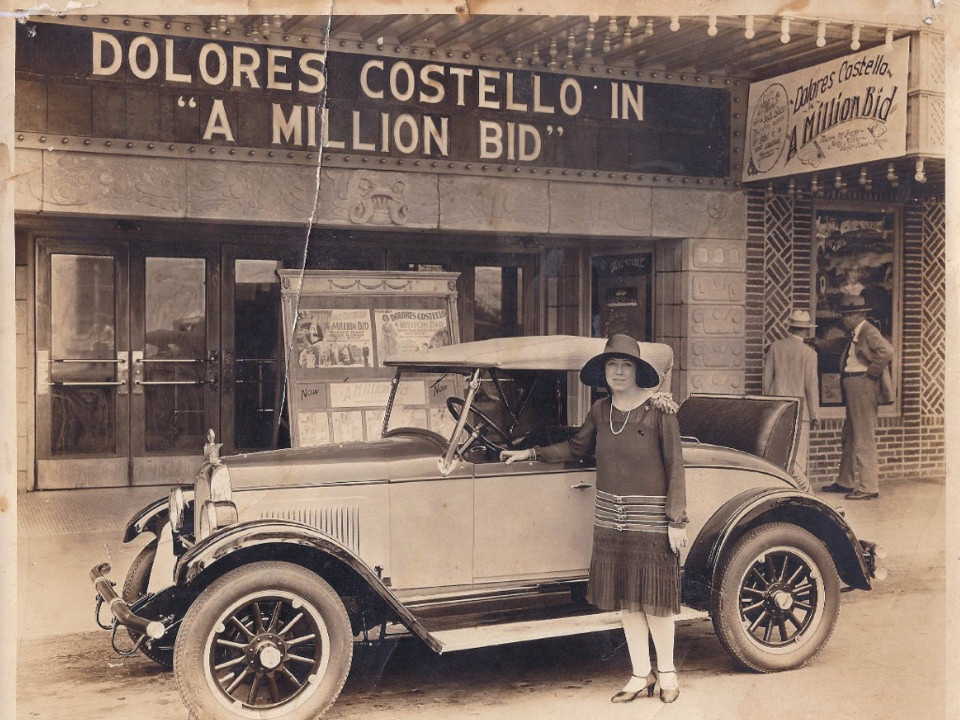
Hazel Burnett, as she was primarily known, was a theater accompanist who performed in Texas’s biggest motion picture palaces in the 1910s and 1920s. Burnett performed for both cinema and live theater as an organist and pianist. After an early career in Ohio, she moved south, where she played at the Majestic Theater in Austin and the Queen Theater and the Aztec Theatre in San Antonio. Burnett’s life as a cinema accompanist at some of the biggest theaters in the United States is documented by the Burnett Collection at the Harry Ransom Center at the University of Texas, Austin. Named for Josephine Burnett, who donated her grandmother’s music to the Ransom Center, this collection contains a wide variety of Hazel Burnett’s materials, including printed cue sheets and full scores; photoplay albums; sheet music; hundreds of pieces clipped out of The Etude and Melody magazines; and handwritten cue sheets and notes. Burnett’s music library and notes indicate that she created many of her scores for accompanying films by combining pieces she already knew well with new works written as characteristic or descriptive pieces for cinema or stage accompaniment. One particularly useful example for understanding Burnett’s practices is her compiled score for the 1920 Paramount film Humoresque, a classic melodrama about a young Jewish violinist. Hugo Riesenfeld, the conductor of several large New York moving picture palace orchestras and a prolific composer for film, created an original score for Humoresque for the film’s premiere, but Burnett, drawing on her own music library, compiled a different one. She used Antonín Dvořák’s “Humoresque” and Max Bruch’s “Kol Nidre” to provide repeated and recognizable themes for the picture, and accompanied the rest of the film with pieces drawn from The Etude and Melody magazines. These magazines catered to cinema accompanists and published numerous short generic or character pieces in each issue. Burnett cut out pieces from the magazine and attached them to other pieces, handwritten cue sheets, or notes indicating their place in a film score. Women frequently published in the magazines, and Burnett clipped hundreds of their pieces out of The Etude. In this male-dominated field, Burnett scored films with pieces written by black English composer Amanda Aldridge, Carrie Jacobs Bond, Esther Gronow, Mae Davis, and others. Audiences in Ohio and Texas who experienced Burnett’s cinematic accompaniments would have heard her original musical accompaniments of Hollywood films with music by women, something previously undocumented in silent film performance. According to documents in the Josephine Burnett Collection, Burnett appears to have sometimes included pieces that would have local resonances into her compiled scores; her Texan audiences would have heard songs by Texan composers and pieces about Texas and the Southwest in Burnett’s accompaniments.
click hereShare This Story


Share your thoughts on this story with us. Your comments will not be made public.
Email
Copyright ©2016 - Design By Bureau Blank