
1962 - Today
By: Wz | Date Added:
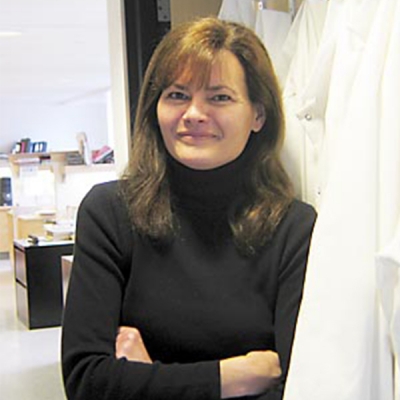
Elizabeth Gould (born 1962) is an American neuroscientist and the Dorman T. Warren Professor of Psychology at Princeton University. She was an early investigator of adult neurogenesis in the hippocampus, a research area that continues to be controversial. In November 2002, Discover magazine listed her as one of the 50 most important women scientists. Gould was born in 1962 and received her Ph.D. in behavioral neuroscience in 1988 at UCLA. In 1989, she joined the lab of Bruce McEwen at Rockefeller University as a postdoctoral researcher investigating the effect of stress hormones on rat brains. Gould’s research focused on the death of cells in the hippocampus. While Gould was documenting the degeneration of these brains, she discovered evidence that pointed to the idea that the brain might also heal itself. Gould discovered evidence of adult neurogenesis in the hippocampus and olfactory bulb of rats, marmosets and macaque monkeys. In her early studies, she laid the groundwork for understanding the relationship between stress and adult neurogenesis. Specifically, she and Dr. Heather A. Cameron reported on adrenal steroid control of adult neurogenesis in rat dentate gyrus. Additionally, her work has provided evidence of neurogenesis in the adult primate neocortex. Gould and the researchers reported new neurons in adult marmoset monkeys are added to three neocortical association areas important in cognitive function: the prefrontal, inferior temporal and posterior parietal cortex. The new neurons appeared to originate in the subventricular zone, where stem cells giving rise to other cell types are located. They then migrate through the white matter to the neocortex, extending axons. Continual addition of neurons in adulthood apparently contributes to association neocortex functions. Gould and her colleagues found that the ovarian steroid estrogen enhances cell proliferation in the dentate gyrus of the adult rat. This effect can be seen following ovariectomy and hormone replacement as well as under naturally occurring changes in hormone levels. They discovered that cell proliferation peaks during proestrus, a time when estrogen levels are highest. Also and conversely, steroid hormones of the adrenal glands were found to inhibit cell proliferation in the dentate gyrus but do so indirectly via an NMDA receptor dependent mechanism. Although the function of new neurons in the adult brain is as yet unknown, Gould and her colleagues have begun to conjecture possibilities. So many new neurons are generated in the hippocampus and these cells appear to be sensitive to experience, therefore it seems likely to the Gould team that they participate in hippocampal function. They are exploring the possibility that new neurons participate in two functions of the hippocampus, learning and modulation of the stress response. They have shown that learning enhances the number of new neurons but only under certain conditions. Furthermore they have discovered, experimental depletion of new neurons is associated with impairment in certain types of learning but not others. A decrease in the number of new neurons following treatment with anti-mitotic drugs impairs trace eyeblink conditioning but not spatial learning in a Morris water maze, both hippocampal-dependent tasks. Gould received a multitude of awards throughout the duration of her career. From 1989 to 1991, Gould was awarded an NRSA Individual postdoctoral fellowship. From 1991 to 1992, she was awarded the WinstonTri-Institutional (Rockfeller, Cornell, sloan-kettering) fellowship. From 1992 to 1993, she was awarded an American Paralysis Association grant. From 1993 to 1994, she was awarded the NIMH RO3 small grant. From 1994 to 1996, she was awarded the NARSAD Young Investigator Award. From 1994 to 1999, she was awarded the NIMH FIRST award. In 2000, she was awarded the National Academy of Sciences Troland Award. In 2006, she was awarded the NARSAD Distinguished Investigator Award. In 2009 she was awarded the Benjamin Franklin Medal by the Royal Society for the encouragement of Arts, Manufactures and Commerce (RSA) for her groundbreaking work on neurogenesis.
click hereShare This Story


Share your thoughts on this story with us. Your comments will not be made public.
Email
Copyright ©2016 - Design By Bureau Blank