
1912 - 1969
By: Wz | Date Added:
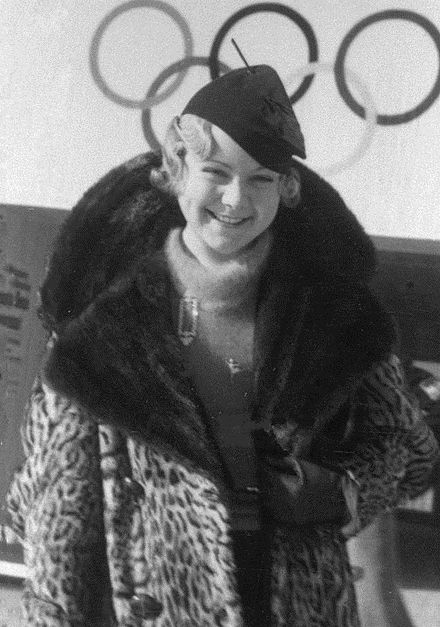
Henie was born in 1912 in Kristiania (now Oslo) Norway; she was the only daughter of Wilhelm Henie(1872–1937), a prosperous Norwegian furrier, and his wife, Selma Lochmann-Nielsen (1888–1961). In addition to the income from the fur business, both of Henie's parents had inherited wealth. Wilhelm Henie had been a one-time World Cycling Champion and the Henie children were encouraged to take up a variety of sports at a young age. Henie initially showed talent at skiing, then followed her older brother, Leif, to take up figure skating. As a girl, Henie also was a nationally ranked tennis player, and a skilled swimmer and equestrienne. Once Henie began serious training as a figure skater, her formal schooling ended. She was educated by tutors, and her father hired the best experts in the world, including the famous Russian ballerina, Tamara Karsavina, to transform his daughter into a sporting celebrity. Henie won her first major competition, the senior Norwegian championships, at the age of 10. She then placed eighth in a field of eight at the 1924 Winter Olympics, at the age of eleven. Henie went on to win first of her three Olympic gold medals the following year, becoming one of the youngest figure skating Olympic champions. She defended her Olympic titles in 1932 and in 1936, and her world titles annually until 1936. She also won six consecutive European championships from 1931 to 1936. Henie's unprecedented three Olympic gold medals haven't been matched by any ladies' single skater since; neither are her achievements as a ten-time consecutive World Champion. Towards the end of her career, she began to be strongly challenged by younger skaters including Cecilia Colledge, Megan Taylor, and Hedy Stenuf. However, she held off these competitors and went on to win her third Olympic title at the 1936 Winter Olympics albeit in very controversial circumstances with Cecilia Colledge finishing a very close second. Indeed, after the school figures section at the 1936 Olympic competition, Colledge and Henie were virtually neck and neck with College trailing by just a few points. Henie is credited with being the first figure skater to adopt the short skirt costume in figure skating, wear white boots, and make use of dance choreography. Her innovative skating techniques and glamorous demeanor transformed the sport permanently and confirmed its acceptance as a legitimate sport in the Winter Olympics.
click hereShare This Story


Share your thoughts on this story with us. Your comments will not be made public.
Email
Copyright ©2016 - Design By Bureau Blank