
1921 - 2015
By:
Alla Akerzhnerman
|
Date Added:
Edited
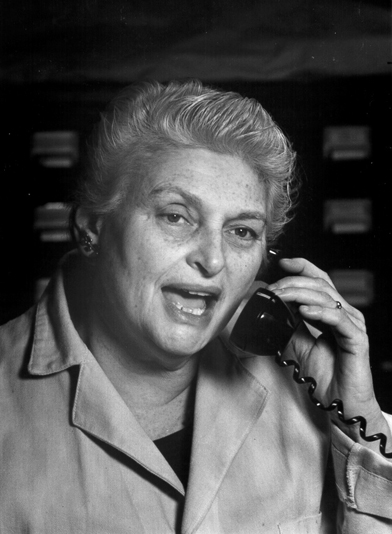
Ethel Tobach was an American psychologist known for her work in comparative and peace psychology Ethel Tobach was born in Miaskovka, a small village in the Ukraine, On November 7, 1921. Her mother came from a Jewish family that owned the village’s mill and general store. Her father was an orphan who made his living tutoring students in villages without proper schools. As Labor Zionists, they planned to stay in her village after the Russian Revolution and cultivate the land that the Red Army had offered them. Shortly afterward, however, the village was captured by the White Army, which was carrying out pogroms against the Jews. Ethel was born during this period, and her parents escaped to Palestine when she was two weeks old. Her father died in Palestine when Ethel was nine months old, and her mother immigrated with her to Philadelphia, where she became an activist in the garment workers’ union. She attributes her radical politics to her mother’s socialism. She also worked at blue-collar occupations while studying at Hunter College, from which she graduated Phi Beta Kappa in 1949. Shortly after World War II she met and married Charles Tobach, a radical man who belonged to the same union as she did. He encouraged her to go on for a Ph.D. in psychology at New York University. At this time, NYU was not very enthusiastic about enrolling married women because they did not “stay in the field,” but “in her innocence.” She obtained her Ph.D. in comparative psychology in 1957, working under the supervision of a leader in the field, T.C. Schneirla. Tobach began her professional career at the American Museum of Natural History, where she remains as Curator Emerita. From 1957 to 1961, she was a research fellow in its department of animal behavior. She became associate curator of that department in 1964 and served as curator from 1969 to 1981. Tobach has had a few full-time appointments at various universities in the New York City area and continues to teach graduate biology and psychology courses at the City University of New York. However, most of her career has been spent as a full-time researcher. It is impossible to describe adequately Tobach’s research, which has been both voluminous and broad in scope. She has written or edited 117 professional articles, book chapters, and books. She regards her major contributions to comparative psychology as showing links between stress and disease, and the evolution of social behavior. Tobach has been a consistent critic of genetic determinism as it is expressed in psychological theory in general, in comparative psychology, and in societal racism and sexism. In 1978, she and Betty Rosoff initiated a book series, Genes and Gender, the first such series of its kind. These books are an important contribution to a field that is relatively unsophisticated about the interactions between biological and social processes. Tobach’s leadership activities within psychology illustrate her commitment to both science and social activism. She was vice president of the New York Academy of Sciences in 1972, president of the Division of Comparative and Physiological Psychology of the American Psychological Association in 1984–1985, and president of the Eastern Psychological Association in 1987–1988. She has also been actively involved in the American Psychological Association’s Society for the Psychological Study of Social Issues and received that organization’s Kurt Lewin Award in 1993. She is president of the American Psychological Association’s Division 48 – Society for the Study of Peace, Conflict, and Violence: Peace Psychology Division. In 2003 the American Psychological Association awarded her its Gold Medal Award for Lifetime Achievement in Psychology in the Public Interest. According to the medal citation, Tobach “has exposed the unsound science and social damage of genetic determinism institutionalized as racism and sexism. She has been a leader in psychology activist groups seeking constructive public policies, nuclear disarmament, peace building. She is a socially responsible scientist.
click hereShare This Story


Share your thoughts on this story with us. Your comments will not be made public.
Email
Copyright ©2016 - Design By Bureau Blank