
1861 - 1943
By: Denise Roper | Date Added:
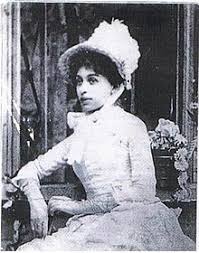
She became one of the first African American teachers in the Boston public school system during her time. Her parents were politically well known and this helped in her ability to gain experience not afforded to most African American women before. Florida Ruffin Ridley was born in Boston, Massachusetts into a middle class family. Her father, George Lewis Ruffin broke two of the color barriers when he became the first African American to graduate from Harvard Law School and later when he became the first African American judge in the United States. Her mother Josephine St. Pierre Ruffin was a high profile writer, civil rights activist, and suffragist. In her youth, Ruffin attended a Boston public school. In 1882 she graduated from Boston Teachers’ College. Soon, she became the second Boston public school African American teacher, just after Elizabeth Smith. Teaching at the Grant School from 1880 until 1888 when she got married to Ulysses A, Riley, Ruffin Ridley found herself being forced out of the teaching profession. However, she stayed connected with the community by becoming a club woman. During the late 1880s, she became immersed in the suffrage and anti-lynching movement. In 1890 she set up the Society for the Collection of Negro Folklore in her hometown. Through her position of writing essays and working as a journalist, she presented writings in the Journal of Negro History, The Boston Globe and others. Ruffin Ridley became involved in her mother’s monthly publication called Women’s Era. She co-edited and published stories that were most concerning to African American women. Her political voice came alive after this experience and she felt a desire to elevate members of her race. She penned an open letter to Laura Ormiston Chant, a popular white feminist that criticized lynching. Ruffin Ridley writes “All that we ask for is justice, not mercy or palliation, simple justice, surely that is not too much for loyal citizens of a free country to demand”. She continued her activism by establishing and becoming involved in various clubs around Boston and nationwide which elated African Americans. Intrigued with gathering artifacts to study race relations in New England, Ruffin Ridley stumbled upon a historian project, founded by her called Society of Descendants of Early New England Negroes. In her works of fiction, she discusses how racially dubious people in the late 1880s and the early 1900s would cross through New England. In contrast, she wrote about how she was ethnically diverse. Two of her short stories “He Must Think It Out” and “Maria Peters: A Peculiar Woman” highlights the mental affects of racism and its universal role for humanity. Her ongoing advocacy became instrumental in prolonging the entirety of the Harlem Renaissance in Boston.
click hereShare This Story


Share your thoughts on this story with us. Your comments will not be made public.
Email
Copyright ©2016 - Design By Bureau Blank