
Date Added:
Edited
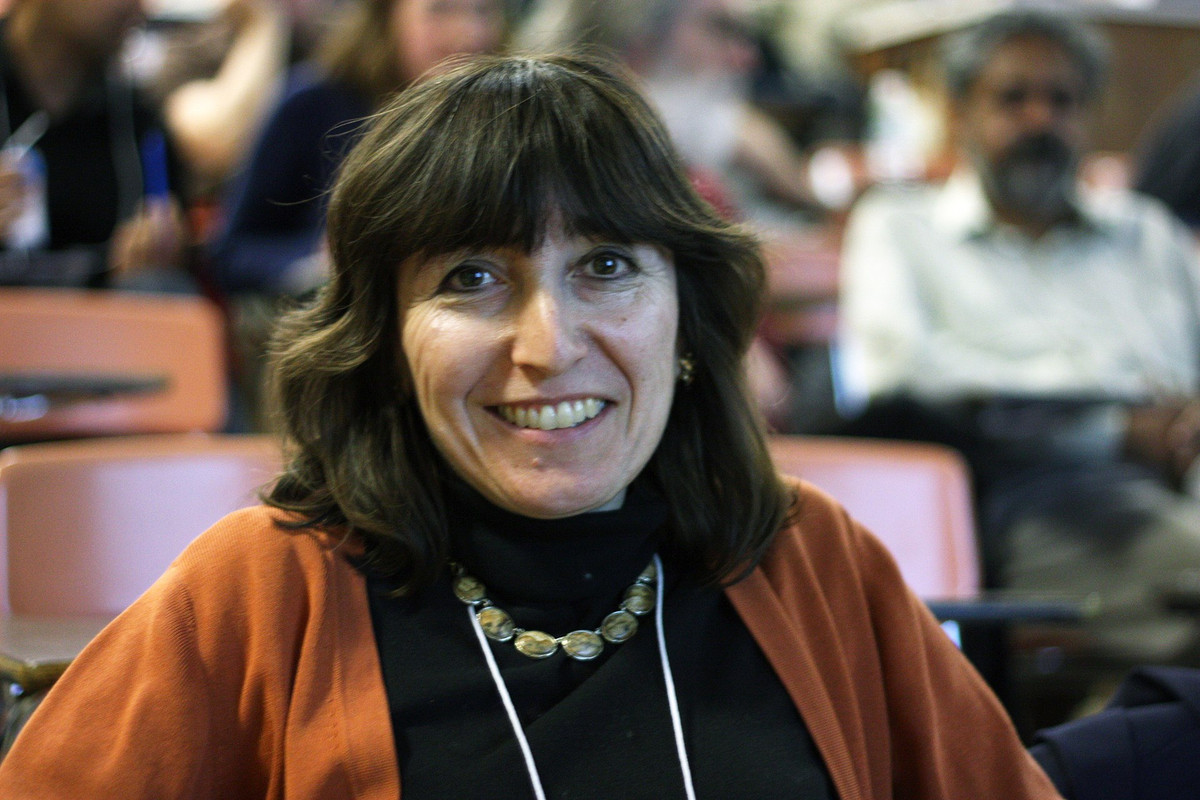
Wendy Laurel Freedman (born July 17, 1957) is a Canadian-American astronomer, best known for her measurement of the Hubble constant, and as director of the Carnegie Observatories in Pasadena, California, and Las Campanas, Chile. She is now the John & Marion Sullivan University Professor of Astronomy and Astrophysics at The University of Chicago. Her principal research interests are in observational cosmology, focusing on measuring both the current and past expansion rates of the universe, and on characterizing the nature of dark energy. EARLY LIFE AND CAREER Freedman grew up in a culturally Jewish family in Toronto, the daughter of a medical doctor and a concert pianist. Her early interest in science was kindled by a formative high-school physics class. This led her to the University of Toronto, where she was first a biophysics student, then an astronomy major, receiving her B.Sc. in 1979. She remained at Toronto for her graduate work, receiving a Ph.D. in astronomy and astrophysics in 1984. Joining the Carnegie Observatories in Pasadena, California, as a post-doctoral fellow in 1984, she became a faculty member of the scientific staff three years later as the first woman to join Carnegie's permanent staff. In 2003 she was named to the Crawford H. Greenewalt Chair and Director of Carnegie Observatories. Freedman's early work was principally on the Cepheid distance scale. HUBBLE CONSTANT Freedman was co-leader of an international team of 30 astronomers to carry out the Hubble Space Telescope Key Project, a program aiming to establish the distance scale of the Universe and measure the current expansion rate, a quantity known as the Hubble constant. This quantity determines the size of the visible universe and is key to determining its age. Over the course of the Key Project, the team measured the distances to 24 galaxies using Cepheid variable stars, and measured the Hubble constant using five independent methods. The project's researchers, led by Freedman, published their final result in 2001. The work provided a value of the Hubble constant accurate to 10%, resolving a long-standing, factor-of-two debate.
click hereShare This Story


Share your thoughts on this story with us. Your comments will not be made public.
Email
Copyright ©2016 - Design By Bureau Blank