
1921 - 2008
By: Alejandro Serrano | Date Added:
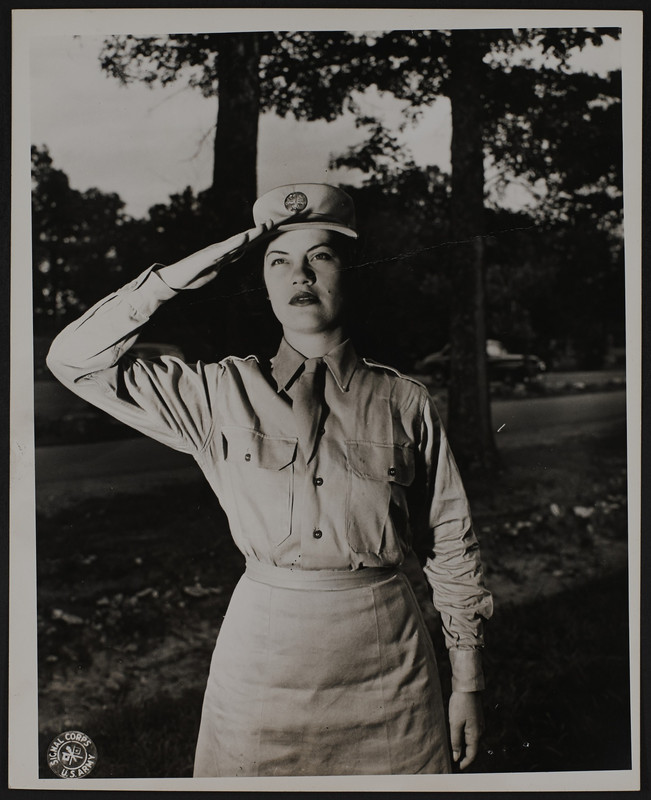
Grace Thorpe was a WWII veteran, and Native rights and environmental activist. Grace's heritage was mixed, with traces of Potawatomi, Kickapoo, and Menominee. She served with the Women’s Army Corps during the New Guinea campaign. She would go on to be a tribal district court judge. Grace Thorpe was born on December 10, 1921 in Yale, Oklahoma. Her father was well-known American football player and Olympic athlete Jim Thorpe. Grace was the youngest of four children. Along with being from a mix heritage, Grace was also a direct descendant of Sac and Fox chief, Black Hawk, a band leader and warrior of the Sauk Native American tribe in what is now the Midwest of the United States. When her parents divorced in 1923, her mother took the family and moved to Chicago, while Jim Thorpe moved to California to purse work in western themed movies. She stayed close with her father, visiting him frequently around the country. In 1943, Grace worked briefly at the Ford Motor Company before enlisting in the Women’s Army Corps during World War II. After attending training and graduating from the WAAC Training Center in Ft. Oglethorpe, Georgia, Thorpe attained the rank of Corporal, and served as a Recruiter for the Women's Army Corps stationed in Tucson and Camp White in Oregon before being assigned overseas to the New Guinea Campaign, when the Empire of Japan invaded the Australian administered Mandated Territory of New Guinea and the Australian Territory of Papua. From 1944 to 1945, Corporal Thorpe was stationed in New Guinea, Philippines and Japan. Following an Honorable Discharge in 1945, Grace remained in Japan during the occupation with her husband Lieutenant Fred W. Seely, whom she married in June of 1946. She became employed at General MacArthur Headquarters as Chief of the Recruitment Section, Department of Army Civilians, Tokyo, Japan. Both of her children were born during this time in Japan. She was later awarded a Bronze Star for her service in the New Guinea Campaign. In late 1969 and 1970 Grace Thorpe joined a group of Native activists in their occupation of Alcatraz Island off the coast of San Francisco. This occupation called national attention to a long history of Native grievances that the activists felt the federal government was too slow in addressing and it represented a watershed moment for Native activism. After her participation in the occupations of 1969 and 1970, Thorpe went on to be a lobbyist on behalf of the National Congress of American Indians, working especially to further economic opportunities for Native families on reservations by pushing factories to locate on Native land. In 1971, Thorpe cofounded the National Indian Women's Action Corps, a group that focused on empowering Native women and strengthening indigenous family units. During the mid-1970s Grace Thorpe represented Native interests in her interactions with the United States Congress. Grace was later appointed Legislative Assistant with the Senate Select Committee on Indian Affairs and as a Task Force Program and Planning Analyst for the American Indian Policy Review Commission. She also worked as a part-time district court judge for the Five Tribes of Oklahoma. Thorpe's environmental activism began in 1992 when the Sac and Fox tribe had accepted a federal grant to study the placement of radioactive waste on tribal land. The Sac and Fox, as well as sixteen other Native American tribes, accepted the grant, believing that the money would come without strings attached and would help alleviate their high unemployment. She worked endlessly to convince the tribes to withdraw from the Department of Energy’s Monitored Retrievable Storage program. Thorpe continued her fight against what she called “environmental racism”. Grace Thorpe died on April 1, 2008 from complications following a heart attack. She is remembered for her military, legal, and activist legacy.
click hereShare This Story


Share your thoughts on this story with us. Your comments will not be made public.
Email
Copyright ©2016 - Design By Bureau Blank