1918 - 1996
By: Cessya Lopez | Date Added:
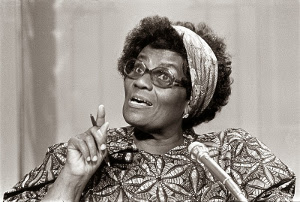
Annie Jiagge More Than A Woman: More than what society conditioned her to be By Cessya Lopez This day and age we are taught about people who’ve made a difference in this world, but sometimes history forgets to include certain people that have helped shape the world today. Many may not know Annie Jiagge’s name and how she played a major part in obtaining justice for women. Born Annie Ruth Baeta on October 7th, 1918 in Lomé, Togo, Annie’s parent, Reverend Robert Domingo Baeta and Henrietta Baeta, were both teachers. Annie later on got married to Fred K. A Jiagge on January 10th, 1953.When Jiagge was ready to start her early education, she went to live with her maternal grandmother Julia B. Sedode in Keta, Ghana so that she could be taught in English. In 1938 she received her teacher certificate from Achimota College. Soon after receiving her certificate she started her first teaching job in Ewe Presbyterian Girl School in Keta she was then later promoted to head teacher. She left Ewe Presbyterian Girls’ School in 1944. In 1947 although Jiagge was successful in her teaching career she wanted more and decided to go back to school to become a lawyer. With passing her matriculation exam Jiagge entered London School of Economic and Political Science to study law. She was then later admitted to Lincoln Inn which is a program where lawyers practice and are called to take the bar. She was one out of four women and the only black woman to be enrolled in the program. Many of Jiagge’s colleagues felt that she should study dress design for they believed the work load would be too much for a woman. She proved them wrong in 1949 when she received her bachelor of law degree and a year later she was called to take the bar. Jiagge returned to Ghana and applied to become a barrister in the Supreme Court. Annie Jiagge was the first female judge in Ghana; she used her platform to actually make a difference in the world and that was to stop discrimination against women. In 1962 Jiagge was selected to speak for Ghana in the United Nations for Commission on The Status of Women four years later she was appointed to be the Reporter of the Commission. She eventually became the President in 1968 and she became a judge in the Court of Appeals. She was the President of the Court of Appeals from 1980-1983. In 1975 Ghana was the first African country to instate machinery of government to help promote women’s development. The machinery of government is a structural arrangement approved by the state, or local government to deliver legally mandated programs. Also, in 1975 Esther Ocloo, Annie Jiagge, Michaela Walsh who is a financier, activist, educator, activist and Ela Bhatt an Indian cooperative organizer and activist co-founded Women’s World Banking which was designed to help women with access to credit; it was featured in over fifty countries. Soon after that Jiagge wrote an ecumenical review which is a theological journal that speaks on the importance of unity and religion, the journal is titled Exploitation of Women in A Third World Perspective. Jiagge played a major part in drafting United Nations Convention on the Elimination of all Forms of Discrimination Against Women, which was implemented by the United Nations in 1979. That document that is still in place today sets norms for the rights of women all over the country. In the words of a fellow colleague, Dr. Boutros Boutros- Ghali:“It’s the main instrument defining women's rights” (Ghali, United Nation Division for the Advancement of Women). Jiagge’s contribution to society was rarely mentioned in history books, she was never glorified for all she has done for the people not just women. She helped build a foundation that help women with their credit, she drafted a document that helps bring discrimination to women to an end. “Injustice eats me internally; I get very restless when I come in touch with it” (Jiagge, Empower women) Justice Jiagge retired from the bench in 1983, but even after that she was very much active, she was part of Ghana’s Council State which advises the resident on national issues. Justice Annie Ruth Jiagge passed away on June 12th 1996 at the age of 78 in Accra, Ghana. Justice Annie Ruth Jiagge was one of the many little-know women who fought a good fight for her community as well as internationally. She took her platform being a judge and fought for what was right. She didn’t let anyone tell her that she couldn’t. In 1961 Jiagge started a campaign to raise funds for the Young Women Christian Association to build a hostel for women in Accra, Ghana. The reason behind her starting this campaign was she was presented a case where a woman traveled from the country side to Accra for a job interview, and after the interview was over it was too late for the young woman to travel home. Foolishly she accepted a man’ invitation to stay the night at his home and she was raped and robbed. With the assistance of the government and President Kwame Nkrumah, Jiagge was able to receive the funding and till this day YWCA women’s hostel is still helping women. Late Justice Annie Jiagge should be someone who is in our textbooks. She is someone we should all know for she played a major part in eliminating discrimination against women, along with the help of many other women. I’m sure many have never heard of her but because of her contribution we were able to break barriers women faced. As the late Justice Annie Jiagge once said: “We can do so much, we must do it as women. Not as imitation of men. Women are playing a big role in development because they bring an extra ingredient of femininity”(https://www.google.com/search?q=annie+jiagge&source=lnms&tbm=isch&sa=X&ved=2ahUKEwif4s69osHpAhUMZKwKHULBDekQ_AUoAXoECBwQAw&biw=640&bih=447#imgrc=IYG-EErXugFuRM ) I chose to honor Justice Annie Jiagge because her quote, above, inspired me to make my own way and not doing it in a male’s aspect. This quote deeply touched me deeply mentally and the reason for that is because of how women are seen in society. Some women have to work twice as hard in order to be respected in male dominated world. When I read that quote something in me was relieved to know that I don’t have to imitate a man’s action to get my point across or even get noticed, that I should act in my own way. Her quote wasn’t the only inspiration that stood out for me; it was also her being the first female judge in Ghana around the 1950’s. I would say it is big deal for a woman to have succeeded what many would have said is a man’s job and be a change maker. As a student of Hostos Community College taking Women’s Gender studies with Dr. Fisher I have definitely had my eyes opened to see how much women have contributed in history and how many aren’t known let alone honored. Partnering up with WomenActivism.NYC has giving us the voice to honor women whom we feel have made a difference.
Share This Story


Share your thoughts on this story with us. Your comments will not be made public.
Email
Copyright ©2016 - Design By Bureau Blank